
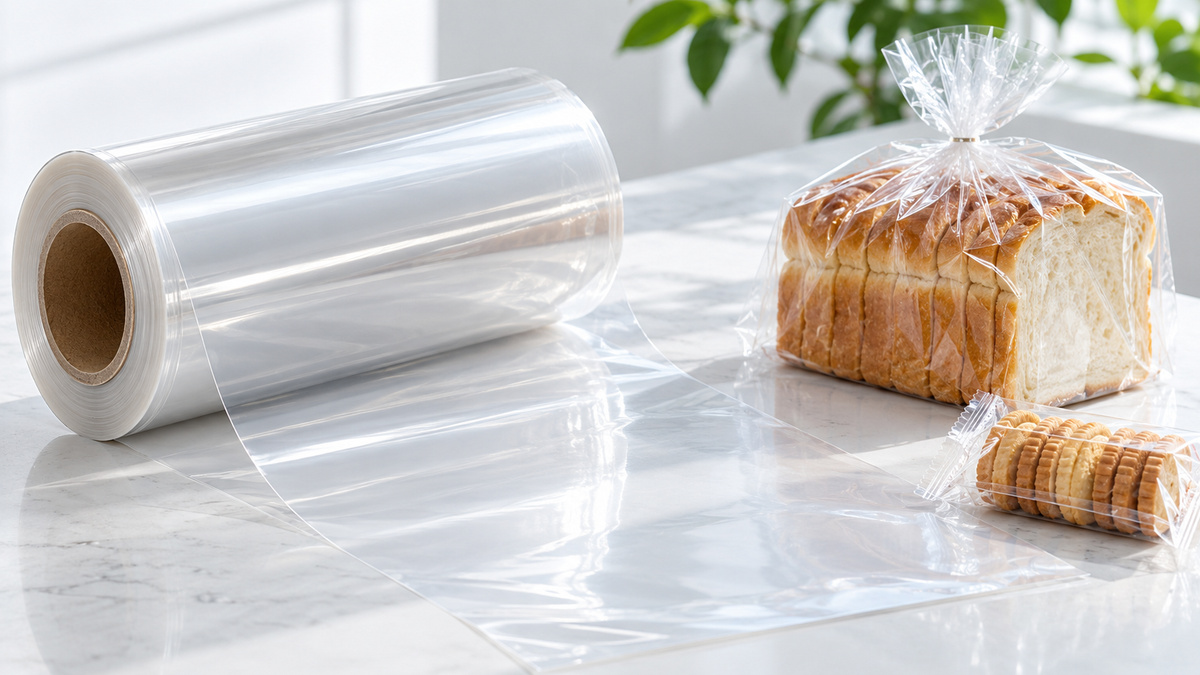
Making CPP Food Packaging More Material Efficient
Explore practical CPP film improvements through thickness optimization, functional structures and testing that protects sealing, clarity and accepted output.
Improving the sustainability of CPP food packaging requires looking at material use and packaging performance together. Reducing thickness can lower film consumption, but the change needs to preserve sealing, handling and the protection required by the food.
For cast polypropylene film, a practical development target is therefore a more efficient finished package, rather than simply the lowest possible film weight.
Measure Material Use Against Accepted Output
Film weight per pack is a useful starting point, but it should be compared with accepted production output. A thinner film that causes more breaks or seal rejects may not deliver the intended improvement.
Bakery wrappers and snack packaging also need to retain the appearance and handling behaviour expected in production and distribution. Record scrap, leaks and damage against the current package when evaluating a thickness change.
Use the Structure to Provide the Required Function
CPP offers flexible, clear and heat-sealable options for suitable food applications. Where additional oxygen protection is needed, ordinary CPP alone may not provide the required performance. Coatings and other functional layers can be considered as part of the complete construction.
Review PP-Based Designs as Complete Packages
BOPP and CPP can be evaluated within PP-oriented structures where the application allows. Printing, adhesives and any barrier components still need to be included in a recycling assessment. Material simplification should preserve the functions that support food quality and line performance.
Keep Environmental Claims Specific
A PP base film does not establish universal recycling access, and ordinary CPP should not be described as compostable. The appropriate claim depends on the finished structure, supporting evidence and disposal arrangements in the destination market.
This distinction helps prevent a material-development improvement from becoming a broader claim that the package has not been assessed to support.
Start with One Measurable CPP Improvement
Share the current gauge, pack format, machine conditions and protection target with DY. Compare candidates under the intended operating conditions, then review material consumption together with product protection and accepted-pack cost. That provides a clearer basis for deciding whether a lighter or revised structure is ready for rollout.