
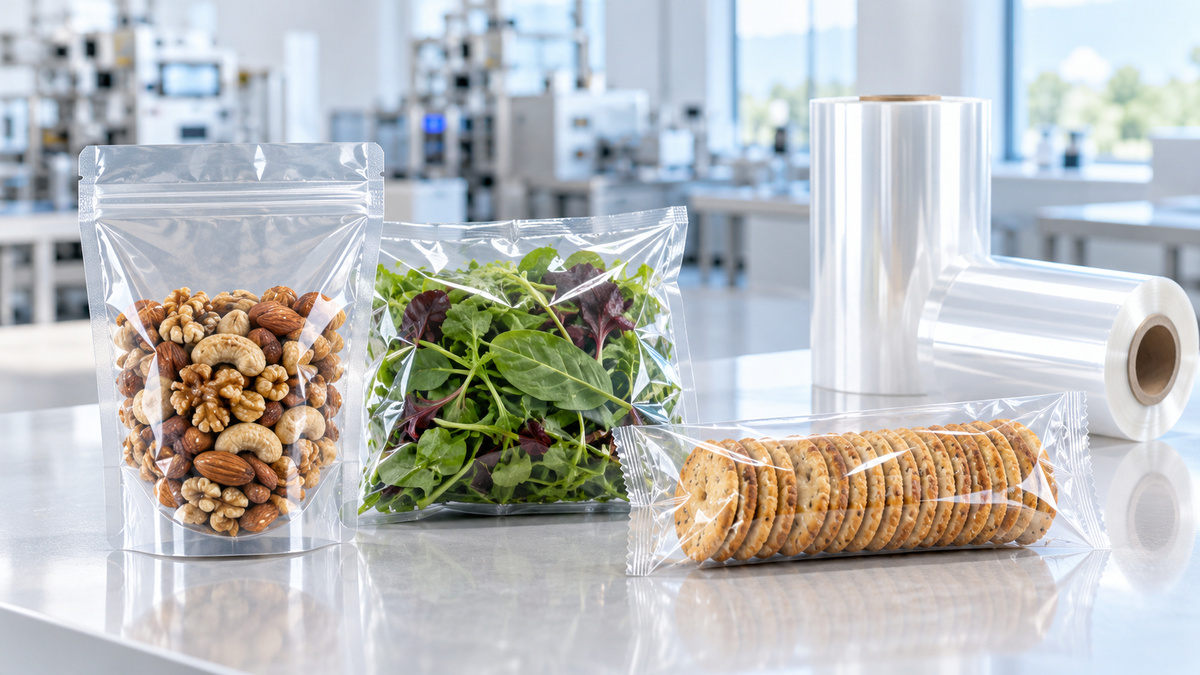
Sustainable Food Packaging Films in 2026: Turning Goals into Practical Choices
Learn how to choose a sustainable food packaging film route by connecting protection, end-of-life evidence, production trials and changeover costs.
Sustainable food packaging involves several different choices: simplifying material combinations, introducing recycled content or considering a compostable format. These routes address different objectives and should not be treated as interchangeable.
A workable project connects the chosen objective with food protection, production capability and the market where the package will be sold.
Decide What the Packaging Change Needs to Achieve
A project aimed at material reduction needs a baseline for film use and package performance. A recycled-content target needs traceability and suitability for the intended application. A compostable format needs appropriate evidence and a disposal route that can handle the finished package.
Clarifying the objective first helps identify relevant candidates and avoids comparing materials that solve different problems.
Food Protection Remains the First Screening Step
Dry snacks need moisture protection, oxygen-sensitive foods need suitable barrier performance, and chilled foods introduce condensation and cold-chain conditions. The existing shelf-life requirement remains relevant when the environmental objective changes.
Candidate films should therefore be screened for the product and package before progressing to line trials. Food-contact suitability must be confirmed for the actual supplied material, particularly when recycled content is involved.
Check the Finished Package and Destination Market
Claims concerning recycling or composting depend on more than the base resin. Include printing, coatings, adhesives and other components in the review, together with the collection and processing arrangements in the market served.
The Film Price Does Not Show the Full Changeover Cost
Qualification may involve samples, testing, documentation, artwork revisions and equipment adjustment. Existing inventory and the timing of the switch can also affect implementation.
Comparing cost per accepted finished pack helps account for scrap and downtime as well as material spending. It also gives a more practical basis for judging whether a proposed change can be sustained in routine production.
Use a Small, Defined Rollout to Build Evidence
Start with one product and agree measurable acceptance criteria with DY. Complete relevant sample checks, line trials and shelf-life evaluation, then confirm the final specification and documents. Expanding after those requirements are met gives the project a repeatable basis for other products, rather than relying on a broad environmental label.