
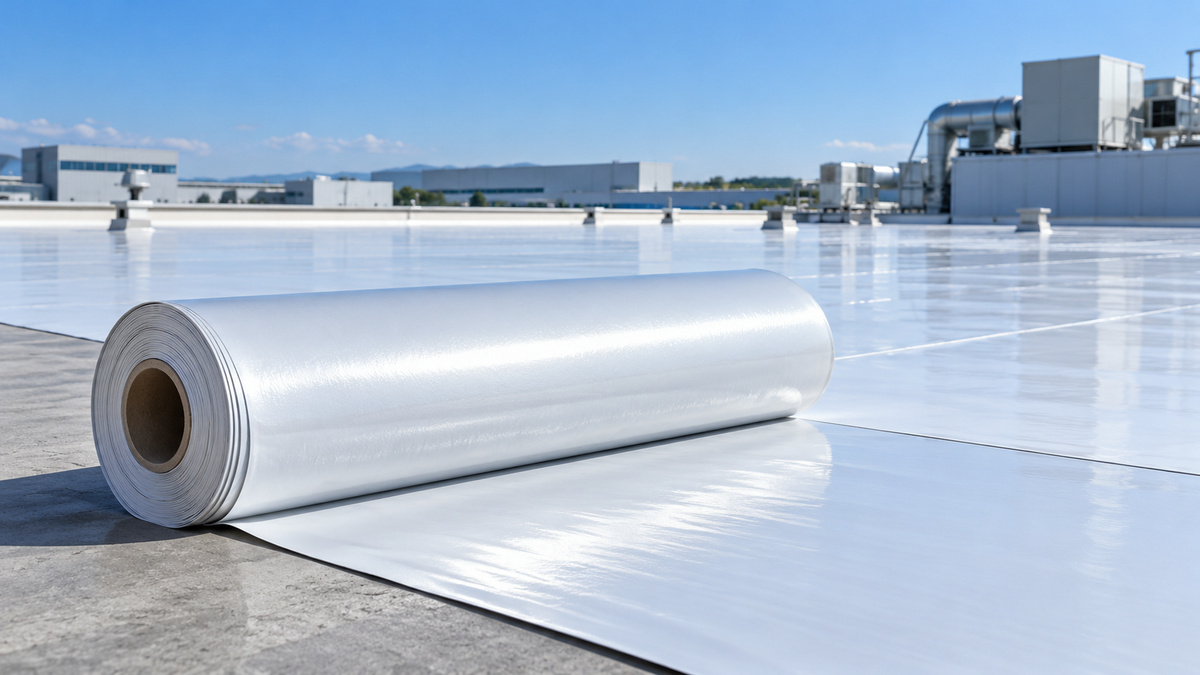
How Radiative Cooling Film Can Help Manage Surface Heat
Learn how Coolvex combines solar reflection and infrared emission, and what to measure when evaluating cooling film on roofs or outdoor equipment.
Cooling film offers a surface-based approach to managing solar heat. Its suitability depends on how the film interacts with sunlight, releases thermal energy and performs as part of the installed assembly. Understanding those distinctions helps set realistic project targets.
Solar Reflection and Heat Emission Work Together
Coolvex is DY’s passive radiative cooling film platform. Its design combines reflection of incoming sunlight with thermal emission through the atmospheric window. The cooling mechanism of the film itself does not require electrical power.
These functions address heat entering and leaving an exposed surface. They should be considered alongside the insulation, ventilation and heat sources already present in the building or equipment.
A Cooler Surface Is Not the Same as a Fixed Energy Saving
Surface-temperature reduction can be relevant to roof and equipment projects, but it does not directly establish a particular indoor temperature drop or electricity saving. Climate, shading, installation, insulation and operating schedules influence those outcomes.
Use a Reference Area for Site Measurements
Compare treated and untreated areas under the same exposure with a defined measurement method. Recording weather, timing and surface conditions helps distinguish the film’s effect from changes in sunlight or ambient temperature.
Installation Conditions Matter to Long-Term Performance
Potential applications include industrial roofs, building surfaces, outdoor equipment enclosures, vehicles and selected agricultural structures. Each needs a review of substrate compatibility, attachment and maintenance access.
Soiling, weathering and adhesion can affect the installed result over time. Grade-specific reflectance and emissivity data should therefore be considered with durability and the intended service conditions.
Define the Result the Project Needs
Share the site, surface, installation area and performance objective with DY. Decide whether evaluation concerns exposed-surface temperature, equipment conditions or building heat gain, then establish the corresponding trial. This keeps the material assessment connected to a measurable application result.